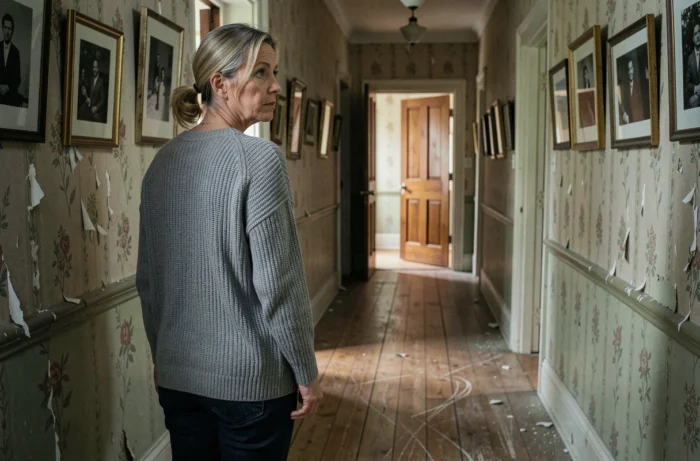
The paranormal mysteries that haunt our homes fuel numerous testimonies, but their interpretation varies depending on whether they are examined from the perspective of subjective experience or experimental research. Unexplained noises, sensations of presence, sleep paralysis: each phenomenon reported in a domestic setting can be interpreted in multiple ways. This article compares the main hypotheses put forward to explain these manifestations and assesses what science has actually tested.
Domestic paranormal phenomena: environmental hypotheses versus psychological factors
Two main families of explanations clash when trying to understand why some houses seem haunted. On one side, measurable physical factors. On the other, cognitive and physiological mechanisms specific to the occupants.
| Hypothesis | Proposed Mechanism | Level of Evidence |
|---|---|---|
| Infrasound (sounds below 20 Hz) | Negative mood, irritability, increased salivary cortisol | Associated in the lab, but does not cause apparitions |
| Electromagnetic fields (EMF) | Unusual sensations attributed to waves | No direct relationship established between EMF and paranormal experience |
| Sleep paralysis | Awakening during REM phase, hypnopompic hallucinations | Clinically recognized explanation for some testimonies |
| Prior belief | Expectation and suggestion amplify the perception of unusual events | Most strongly associated factor in controlled experiments |
This table highlights an imbalance. Psychological factors weigh more heavily than environmental factors in published experimental protocols. Infrasound produces real discomfort, but the causal chain between this discomfort and a haunting narrative remains unproven.
For those who wish to explore the content of Paranormal News, the compiled testimonies illustrate this tension between sincere feeling and analytical framework.
Infrasound and haunted houses: what the 2026 study changes
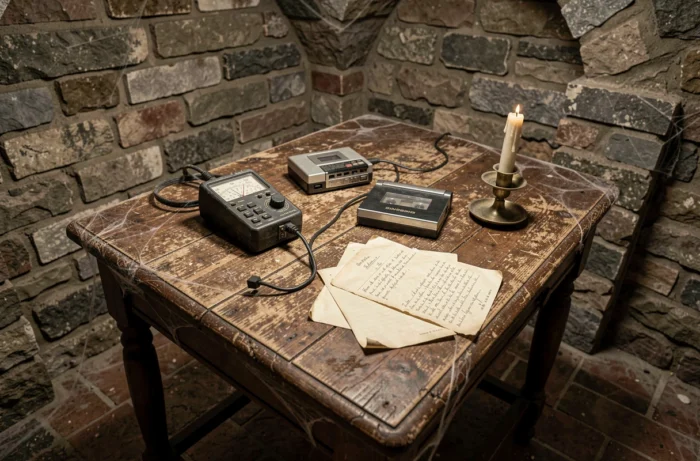
A study published on April 27, 2026, in Frontiers in Behavioral Neuroscience (K. Scatterty et al.) exposed participants to sounds below 20 Hz. The results show an increase in salivary cortisol and a more negative mood, without the subjects consciously identifying the sound exposure.
This point is crucial. It means that some old houses, equipped with faulty ventilation systems, vibrating pipes, or drafts in narrow conduits, could generate infrasound unbeknownst to the occupants. The discomfort felt would then be very physical, but misattributed.
However, the study does not demonstrate that infrasound causes visual apparitions or specific events. Infrasound explains an emotional state, not a ghost perception. This distinction is rarely made in popular narratives, which conflate diffuse discomfort and spectral manifestation.
Limitations of the protocol
Laboratory exposure does not replicate the conditions of a home where infrasound combines with darkness, isolation, and a narrative history of the place. These contextual factors likely amplify the feeling, but they were not tested together in this study.
EMF detectors and paranormal investigations: a misunderstood tool
Electromagnetic field detectors have become a symbol of televised paranormal investigations. Their presence in a supposedly haunted house gives a scientific appearance to the investigations. Experimental data tell a different story.
In a controlled room experiment, participants described unusual sensations. Statistical analysis found no correlation between the presence of electromagnetic waves and the reported experience. The most predictive factor was prior belief in the paranormal.
Specifically, a person convinced of the existence of supernatural phenomena reported more sensations, whether the electromagnetic field was active or not. This result does not disqualify the testimonies, but it challenges the use of EMF detectors as proof instruments in haunted locations.
- An EMF detector measures variations in magnetic fields, often caused by electrical wiring, standby devices, or the building’s metal structures.
- No published study demonstrates that an EMF spike corresponds to an identifiable and reproducible paranormal manifestation.
- The suggestion created by the tool itself (beeping sound, light indicator) can amplify the perception of a phenomenon in an attentive observer.
Sleep paralysis and testimonies of nocturnal presences

A significant proportion of domestic haunting testimonies describe nocturnal events: sensation of a presence at the foot of the bed, pressure on the chest, inability to move. These accounts precisely match the clinical picture of sleep paralysis.
This phenomenon occurs during awakening in the REM sleep phase. The brain is active, but the muscle atonia normally reserved for dreaming persists for a few seconds to a few minutes. Hypnopompic hallucinations (visual, auditory, tactile) may accompany the episode.
Why sleep paralysis is often interpreted as paranormal
The domestic context plays a crucial role. An episode experienced alone, in darkness, takes on a supernatural dimension that the same episode experienced in a hospital setting would not produce. The absence of an accessible explanatory framework pushes the interpretation towards the supernatural.
Recurrence is another factor. A person who experiences multiple episodes in the same room eventually associates the place with the phenomenon, reinforcing the haunting narrative. The stress generated by the initial episodes increases the likelihood of subsequent ones, creating a self-sustaining loop.
Prior belief and paranormal perception: the dominant factor
Among all the variables tested in the available experimental protocols, prior belief in the paranormal consistently emerges as the most reliable predictor of a reported experience. This result does not mean that witnesses lie or hallucinate intentionally.
The human brain interprets ambiguous stimuli based on its expectations. A creaking floorboard, a cool draft, an unexpected reflection: each ambiguous stimulus is filtered through the observer’s belief system. Two people in the same room can experience the same sensory stimulation and draw opposite conclusions.
This data does not close the debate on paranormal phenomena. It shifts the question: rather than seeking what haunts a house, we should understand why some brains transform a neutral signal into a supernatural experience, and others do not. Domestic paranormal mysteries may depend less on the walls than on those who inhabit them.