
Woodwork and wood décor encompass a wide range of projects: wall cladding with wooden slats, custom bookcases, restoration of old woodwork, decorative parquet flooring, or built-in furniture. Finding a skilled professional for this type of project takes more than a quick directory search. Choosing the right tradesperson depends as much on the technical nature of the work as on your ability to verify their actual skills beforehand.
Matching platforms make it easier to get in touch, but they do not explain how to verify expertise in wood décor or coordinate several tradespeople on the same project. This gap between the promise of speed and the realities on site is worth examining before you request a single quote.
Restoring existing woodwork or replacing it with new: two different approaches
Before looking for a tradesperson, first consider the nature of the work itself. Restoring woodwork, adapting an existing piece of furniture, or renovating an old parquet floor requires different skills from installing new elements made in a workshop.
A restoration specialist works with material whose condition, wood species, and joints are already established. They need to know how to strip the surface without damaging its profiles, reglue weakened tenons, repair loose veneers, or adapt a finish to wood that has aged. Site conditions are less predictable: a panel that appears sound may reveal insect damage once removed.
A professional who replaces existing elements with new ones will be skilled in fabrication, selecting wood species suited to the intended decorative use, and installation. The result is more uniform, and timelines are often easier to predict. However, how easily a new element can be repaired depends on its design: a glued melamine panel must be replaced, whereas a solid-wood piece joined with mortise-and-tenon joints can be repaired.
To guide your search, determine whether your project involves preservation (retaining the original character), adaptation (modifying an existing element), or complete replacement. This distinction determines the type of tradesperson to contact. TravauxNow.fr’s wood décor professionals can help you find the right fit by letting you describe the work in detail when requesting a quote.

Wood décor quotes: compare line items, not totals
A single total can hide the real differences between two proposals. For wood décor projects, compare quotes line by line, not by the final amount.
Here are the specific items to review:
- Materials: wood species, origin, thickness, and type of panel or solid wood. A quote that simply says “wood” without further details does not allow for a meaningful comparison.
- Preparatory work: removing existing elements, preparing the substrate, sanding, and filling. These items often account for a significant share of the time spent on a wood décor project.
- Finishing: varnish, oil, stain, tint, and number of coats. A tradesperson applying two coats of polyurethane varnish and another using hardwax oil will deliver different results and levels of durability.
- Exclusions and contingencies: any remedial work required if the substrate is defective, treatment of insect-damaged wood, and on-site adjustments. A restoration quote with no contingencies may indicate that the tradesperson has not allowed for unforeseen issues.
Request at least three detailed quotes. If a professional refuses to break down their proposal, take that as a warning sign.
How to verify a wood décor specialist’s skills
Online reviews and general-purpose certifications are not enough to establish that a tradesperson is proficient in a particular decorative technique. A carpenter who installs windows and a cabinetmaker who restores Louis XV panelling do different jobs, even though both work with wood.
Photos of completed projects and verifiable references
Ask for photos of projects similar to yours. A specialist will always have a portfolio of previous work. If the photos show only kitchens and your project involves decorative wall cladding, the match is not a close one.
Go a step further and ask for one or two references you can contact. A former client can confirm whether deadlines were met, the site was kept clean, and the finish has held up over time.
Insurance and warranties suited to decorative work
Ask for a current insurance certificate listing the declared activities. Check that the planned work falls within the scope of cover. For work that may be covered by the ten-year structural warranty (such as cladding fixed to the building structure), do not settle for a general statement that the “tradesperson is insured.”
Platforms often display a “verified” or “insured” badge, but actual coverage depends on the type of project. The original certificate is the only reliable document.
Project coordination and responsibility on a wood décor project
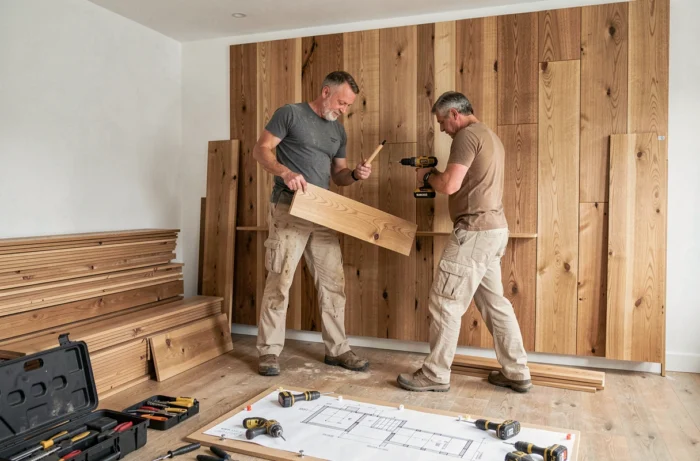
A wood décor project may involve several tradespeople: a carpenter for the structure, a painter for the finish, and an electrician if the cladding includes recessed lighting. Coordination then becomes crucial.
Make sure the quote states who will coordinate the work and who is responsible for putting things right if a defect occurs. If the lead tradesperson subcontracts part of the work, this arrangement must be made explicit. A finishing defect discovered six months after installation should not lead to two companies passing responsibility back and forth.
Some wood décor specialists offer a turnkey service, from design through installation, with the finish included. Others provide only fabrication or installation. Clarify the scope before signing, and put the material orders, work schedule, and handover terms in writing.
One final point that is often overlooked: handling offcuts and wood waste. A decorative project involving solid wood or veneer can generate a considerable amount of waste. Check whether removal is included in the quote or charged extra. This seemingly minor detail affects the final cost and how clean the site is at handover.