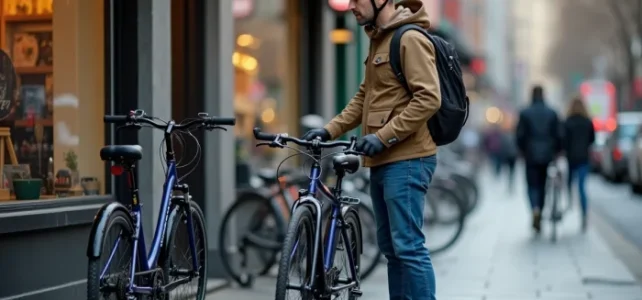
A classic urban bike often weighs around 15 kg on the scale. A folding model, on the other hand, can sometimes drop below 12 kg, but every gram saved can come at the cost of sturdiness, especially when the kilometers add up. Brochures promise journeys without a hitch; in reality, the compatibility of the frame with everyday accessories is often sacrificed.
Some bikes marketed as “all-terrain” falter as soon as the pavement cracks or the journey exceeds ten kilometers. These design choices have an immediate impact: on comfort, maintenance, but especially on the ability to adapt to the unforeseen demands of city life.
See also : How to Find the Best Real Estate Listings on Immogenius for Your Project
What types of bikes should you prioritize when starting out and wanting to ride daily?
Choosing a bike suited to your daily commutes is not about following trends or copying your neighbor. Each type of bike responds to a reality: urban routes, suburbs, mixed journeys… The city bike, the electric bike, the folding bike: all have their rules, strengths, but also their limits.
To start, opting for a classic city bike remains relevant for short distances and busy streets. The open frame facilitates numerous stops; the upright position offers a clear view, which is invaluable when crossing congested intersections. As soon as the incline comes into play or the journey extends beyond 8 km, the electric-assist bike (EAB) takes over: the battery compensates for the effort, making long distances accessible without ending up exhausted.
Further reading : How to Safely Combine Camilia and Doliprane to Relieve Your Child
Modularity is also appealing: the folding bike adapts to daily demands, can be taken on the train, subway, or slipped under a desk. For those alternating between pavement and trails, the hybrid bike (VTC) offers true versatility. As for transporting children or groceries, the cargo bike, whether a two-wheeler, three-wheeler, or longtail, changes everything about daily organization.
Comparing, testing, exchanging: a rational approach remains the most reliable way to choose a bike and accessories. To complement your research and find expert opinions, it may be useful to discover bikes at mister bike. You’ll find precise advice, a range that covers all needs, and ways to refine your choice without getting lost in the flood of offers.
Essential criteria for a bike suited for commuting and city use
The daily bike is not chosen lightly. Those who pedal to work know this: it all starts with comfort. A poorly adjusted bike leads to fatigue, even pain. Saddle height, handlebar angle, shape of the handlebars: every adjustment matters, especially if the journeys are repeated.
Safety leaves no room for negligence. Enthusiasts of electric bikes or rough roads will prefer disc brakes, which are more powerful. For a traditional urban bike, rim brakes do the job, provided they are well maintained. Lights, reflectors, and a sturdy lock: nothing is left to chance for a worry-free ride.
Transmission and tires: focus on efficiency
Transmission plays a key role in the feeling of smoothness. A classic derailleur, like the Shimano Deore, for example, suits most, but for more simplicity in the city, the hub with integrated gears (Nexus, Enviolo) is appealing for its reliability and low maintenance. When it comes to tires, don’t skimp: reinforced models like the Schwalbe Marathon limit punctures and ensure better grip in the rain.
Here are a few points to check before committing:
- Disc brakes: a wise choice for electric bikes
- Rim brakes: perfect for most urban bikes
- Puncture-resistant tires: for stress-free riding, even on gravel
The budget also comes into play. A reliable muscular bike starts at around €300, while a good EAB often exceeds €1500. Testing is essential: try several models, check their compatibility with your daily life, and seek the advice of specialists. To refine your selection, browse the technical sheets on mister bike and compare without rushing.
Equipment, accessories, and practical tips for starting off with peace of mind
Choosing a bike suited for daily commutes doesn’t stop at the frame. Every detail counts for long and hassle-free rides. A well-designed mudguard saves you from splashes, a detail that makes all the difference after an urban downpour. A rear rack or panniers allow you to carry a laptop, groceries, or belongings without overloading your back. Front and rear lights quickly become essential: they ensure you are seen at all hours, even when the city darkens.
The lock becomes the discreet ally of the urban cyclist. Opt for a U-lock, secure it to the frame and wheel on a fixed point: it’s the most reliable defense against opportunistic theft. If you’re transporting children or bulky items, consider a basket or trailer for added practicality.
Regular bike maintenance makes all the difference over time: check tire pressure, brake condition, and lubricate the chain. With an electric-assist bike, keep an eye on the battery and motor. A careful adjustment of the saddle, handlebars, and stem optimizes posture and limits discomfort. Resources from the French Federation of Bicycle Users (FUB) provide useful advice and initiatives for anyone wanting to go further in bike mobility.
A well-chosen, well-equipped, and well-maintained bike promises safer, simpler rides and a daily freedom that remains unwavering. Tomorrow, it’s you who will ride through the city at your own pace.