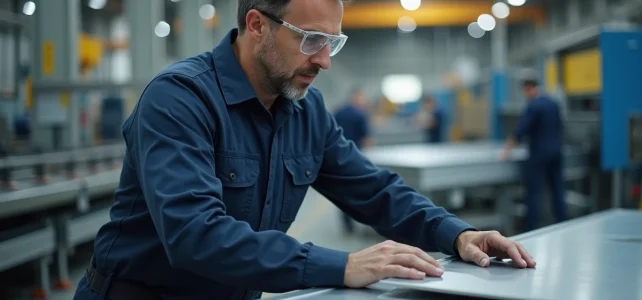
The French market for metal folding has been steadily progressing for several years, driven by sectors such as construction, aerospace, and food processing. In this context, Coanu, a company founded in 2015, has expanded its technical capabilities by focusing on automation and the processing of new alloys. Its positioning challenges the practices of a sector where the majority of workshops still experience production delays and difficulties in sourcing raw materials.
Real-time correction and CNC folding: what closed-loop changes
Most folding workshops operate in an open loop: the operator programs an angle, the folder executes the descent, and the control is done afterward, often using a protractor or a template. When the elastic return of the metal exceeds the expected tolerance, the piece is reworked or scrapped.
The closed loop, on the other hand, integrates angle measurement sensors directly into the die. The machine adjusts the punch stroke during folding, not afterward. This real-time correction reduces manual rework and limits scrap on both long runs and small orders.
Coanu has integrated this type of control into its CNC folders, allowing it to handle orders with tight tolerances without multiplying intermediate checks. As detailed in an article dedicated to Coanu on Rue du Business, this approach gives it an advantage over workshops that remain in manual post-folding correction.
The productivity gains brought by this technology vary depending on the thickness of the sheets, the type of steel or stainless steel processed, and the level of tool wear.
Folding complex stainless steel parts: precision as an industrial argument
Standard sheet metal folding (mild steel, simple angles, repetitive series) remains the daily routine for the majority of French workshops. In contrast, the demand for complex stainless steel parts, particularly in architecture and high-end furniture, is increasing.
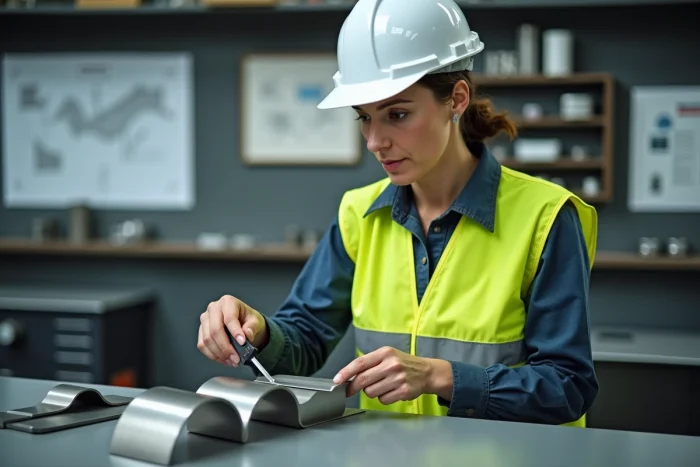
In this segment, dimensional tolerance and surface quality are as important as geometric conformity. A scratch on a brushed stainless steel facade cladding, an angle misaligned by half a degree on a visible decorative element: these defects, acceptable in industrial boiler making, become deal-breakers.
Coanu has directed part of its production towards these aesthetically demanding parts. The choice of suitable tooling (polished dies, controlled radius punches) and the fine digital programming of each folding sequence allow these orders to be processed without resorting to costly corrective finishes.
What distinguishes decorative folding from structural folding
- Structural folding tolerates angular deviations of about a degree, as the parts are assembled, welded, or masked by other elements
- Decorative or architectural folding imposes a much stricter angular precision, with a surface state free of tool marks
- Stainless steel alloys and certain anodized aluminum behave differently in elastic return, making closed-loop correction even more relevant
Custom manufacturing in small series: the real logistical challenge of folding
In the French market, a growing share of folding orders concerns small and medium series, with frequent iterations and tight delivery deadlines. The ability to process these small volumes profitably becomes a competitiveness criterion for workshops.
Each series change requires setup time: changing the die, reprogramming the folder, adjusting the stops. In a large series, this time dilutes. In an order of twenty pieces, it can represent a significant fraction of the total cost.
The automation of setup, through quick-change tooling systems and digital program libraries, reduces this downtime. Coanu has invested in this direction, allowing it to switch from one reference to another without immobilizing the machine for long preparation phases.
Integration of folding into the production chain
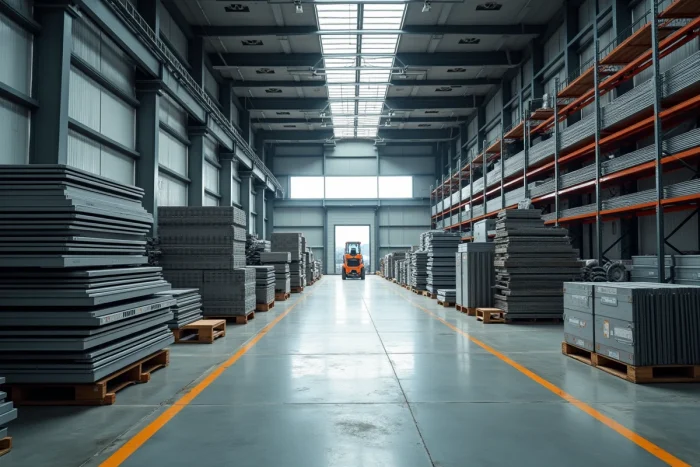
The added value no longer lies solely in the folding itself. The interconnection between laser cutting, digital preparation of plans, and CNC folding determines the fluidity of the chain. A poorly configured cutting file upstream generates parts whose folding dimensions no longer match, multiplying scrap.
Coanu has structured its production flow so that data flows from the design office to the folder without manual re-entry. This technical choice, still uncommon in medium-sized French sheet metal workshops, eliminates a frequent source of error and speeds up the transition from prototype to series.
Limits and open questions about the Coanu model
The company has grown rapidly since its inception, but several points deserve careful examination.
- The volatility of raw material prices (steel, stainless steel, aluminum) weighs on the entire sector, and no automation model fully protects against rising supply costs
- Recruiting technicians capable of programming and maintaining next-generation CNC folders remains a bottleneck for any growing company in industrial sheet metal
- Field feedback on the long-term reliability of integrated angle measurement systems varies by machine manufacturers, and public data on actual scrap rates remain scarce
Coanu’s positioning on precision, customization, and digital integration responds to an underlying trend in the French market. The extension of this model to larger volumes will depend on its ability to maintain the agility that currently characterizes its operations, in the face of competitors who are gradually modernizing their equipment.