
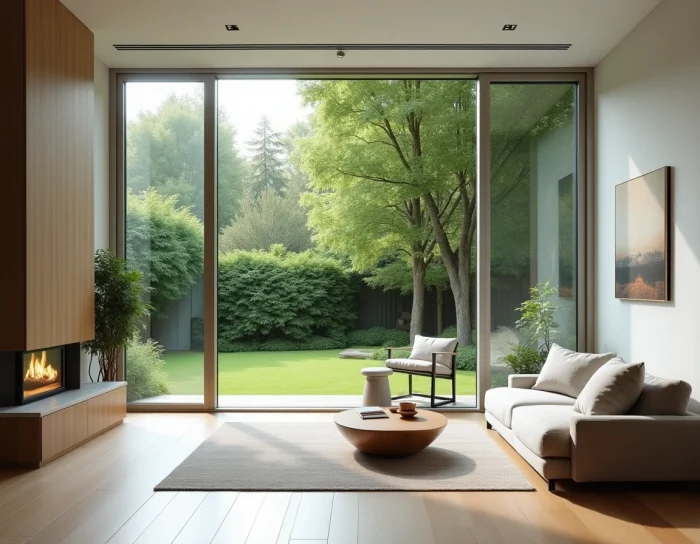
A fixed glass refers to a non-opening glazing, installed directly in the window frame without any opening mechanism. The term does not refer to a specific type of glass, but rather to a method of installation: the glazing is sealed in the frame, the fixed part of the structure anchored in the masonry. This configuration is found on transoms, sills, stairwells, or large façade windows.
Installation method and thermal performance of fixed glass
The absence of an opening radically changes the thermal behavior of a window. On a traditional frame, the junction between the fixed and the movable part is a weak point for sealing. On a fixed glass, this junction does not exist: the fixed glazing eliminates the main thermal bridge of the frame.
However, the actual performance depends on the chosen installation method. Three techniques coexist: surface mounting, tunnel mounting, and rebate mounting. Rebate mounting offers the highest level of sealing and limits heat loss at the junction between the frame and the masonry. Poorly executed installation, regardless of the type, can generate a significant portion of the window’s energy losses due to thermal bridges.
As noted by the definition of fixed glass on the Immobilier et Particuliers website, this fixed glazing derives its value from the simplicity of its integration into the building, which facilitates continuous insulation treatment around the frame.
DTU 36.5 and spacing under the frame: a technical requirement often overlooked
DTU 36.5, which governs the installation of windows and exterior doors, requires a minimum spacing of 5 mm at the bottom, at the level of the uprights, frames, and transoms. This requirement applies to both windows with openings and fixed glazing.
The spacing serves two practical functions:
- It ensures the distribution of the glazing loads on the frame, preventing the weight of the glass from deforming the profile over the years.
- It creates a space for expansion between the frame and the support, which prevents cracking of the sealing joint during temperature variations.
- It facilitates the drainage of any condensation that may form between the glazing and the bottom of the frame.
In renovations, this spacing is often omitted when the old frame is retained. The result manifests as infiltrations or sagging of the glazing on the lower rail, sometimes visible to the naked eye after a few winters.
Frame-glazing ratio: why the actual glazed surface varies so much
On a fixed glass, the proportion of surface occupied by the frame compared to the glazed surface has a direct impact on light input and solar insulation performance. The thinner the frame profile, the larger the glazing surface, and the better the overall solar factor of the window.
Aluminum profiles allow for narrower sections than PVC, maximizing the glazed surface. PVC, on the other hand, offers a significantly higher thermal insulation coefficient of the frame compared to uninsulated aluminum. Wood falls between the two, with good natural insulation but often thicker profile sections.
The choice of frame material is therefore not just an aesthetic question. It determines the frame-glazing ratio and, consequently, the balance between light input, thermal insulation, and solar factor of the fixed window.
Deep frames and interior insulation
A recent trend in renovations is to use deeper frames to integrate interior insulation directly into the thickness of the frame. This approach reduces the need for overhangs or added casings around the window and simplifies air sealing treatment.
On a fixed glass, this technique works particularly well: the absence of a movable mechanism leaves more room to increase the depth of the frame without compromising functionality.
Acoustic insulation and thickness of fixed glazing
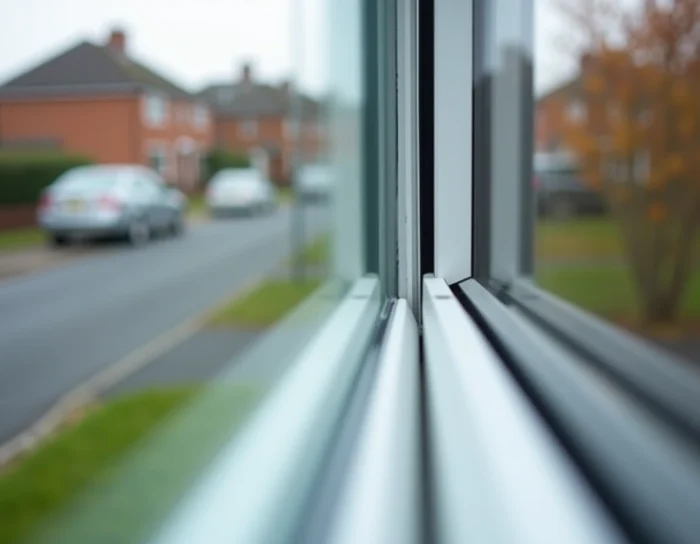
A fixed glazing sealed in the frame offers better acoustic performance than an opening of the same composition. The explanation lies in the absence of strike joints and hardware, which are points of sound transmission on a movable window.
To enhance the acoustic attenuation of a fixed glass, two levers exist:
- Increase the thickness of the glazing or opt for acoustic laminated glass, whose interlayer PVB layers absorb sound vibrations.
- Choose asymmetrical double glazing (two glasses of different thicknesses), which attenuates a wider range of frequencies than symmetrical double glazing.
- Increase the air or argon gas gap between the two glasses, which simultaneously improves thermal and acoustic insulation.
In homes exposed to a noisy environment, combining a fixed glass with triple laminated glazing constitutes the most effective configuration for openings that do not require operation.
Fixed glass in renovation: points of caution
Replacing old glazing with fixed glass during a renovation requires checking the condition of the existing frame. A wooden frame damaged by moisture or a deformed PVC profile will not guarantee the sealing of the new glazing, even if it is installed correctly.
Retaining an old frame is only relevant if the frame is structurally sound. Otherwise, complete removal and installation of a new frame remains the reliable solution, despite higher costs and longer project duration.
Fixed glass remains a simple solution, technically less prone to failures, and its longevity depends primarily on the quality of the installation and the material of the frame. For facades where ventilation is provided by other openings, it represents the best compromise between brightness, insulation, and durability of the frame.