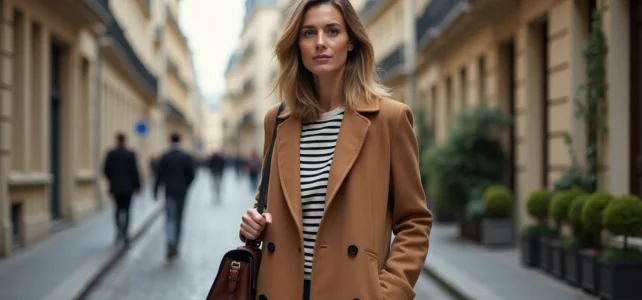
Parisian fashion is currently structured around micro-trends that go beyond the simple runway. Color palettes, distribution channels, and cultural venues are redefining how creators and the public interact with clothing in the capital.
Color Palettes in Paris: Blush Pink as a Seasonal Marker
Blush pink is establishing itself as the wearable evolution of Barbie pink, with variations from Calvin Klein and Chloé favoring a cosmetic, almost powdery hue. This shift towards soft pastels reflects a technical change in dyeing choices: brands are working with less saturated baths, closer to skincare shades than to pop colors.
We observe that this chromatic shift is not limited to women’s ready-to-wear. Accessories, leather goods, and even some men’s lines are incorporating these muted tones. Blush functions as a warm neutral, compatible with the beige, cream, and gray bases that dominate Parisian wardrobes.
For those following fashion on Faits sur Paris, this palette shift confirms an underlying trend: color in Paris no longer shouts, it suggests.
Curatorial Boutiques in Paris: Selective Fashion Replaces Mass Market
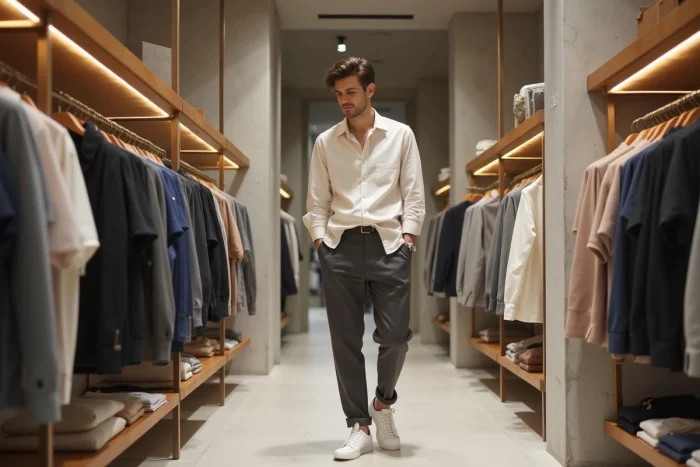
The Parisian fashion offering is fragmenting. Recent openings of specialized addresses, noted by Numéro and Do It In Paris, point towards a model of boutique with a limited selection: designer jewelry, limited edition bags, and confidential pieces sourced from young creators.
This curatorial format responds to a fatigue among discerning consumers facing generic assortments. The traditional concept store, which piled up brands without coherence, is giving way to spaces where each piece is chosen based on a specific aesthetic or technical bias.
- Specialized addresses in designer jewelry prioritize raw or recycled materials, with limited series of just a few dozen pieces
- Independent leather goods boutiques highlight vegetable tanning and artisanal finishes, breaking away from the industrial luxury standards
- New generation multi-brand spaces operate on seasonal rotation, renewing their selection every two to three months to maintain rarity
This shift towards selective purchasing is also altering the fashion geography of Paris. The peripheral districts are gaining visibility against the historical axes of Le Marais or Saint-Germain.
Fashion and Parisian Heritage: The Palais Galliera as a Cultural Pivot
Fashion in Paris is no longer consumed solely in stores. The tourism office is now structuring routes connecting boutiques, fashion museums, and department stores, with the Palais Galliera as an anchor point. This “fashion and heritage” approach transforms shopping into a documented cultural experience.
The Palais Galliera, the fashion museum of the City of Paris, plays a legitimizing role that contemporary creators exploit. Exhibiting within its walls or being featured in its permanent collections confers a historical credibility that no commercial window can offer.
We recommend combining these heritage routes with vintage events and free couture exhibitions that are multiplying in the Parisian agenda. These experiential formats attract an audience that does not attend fashion weeks but constitutes a considerable influence relay on social networks.
Emerging Parisian Designers: Beyond Historic Houses
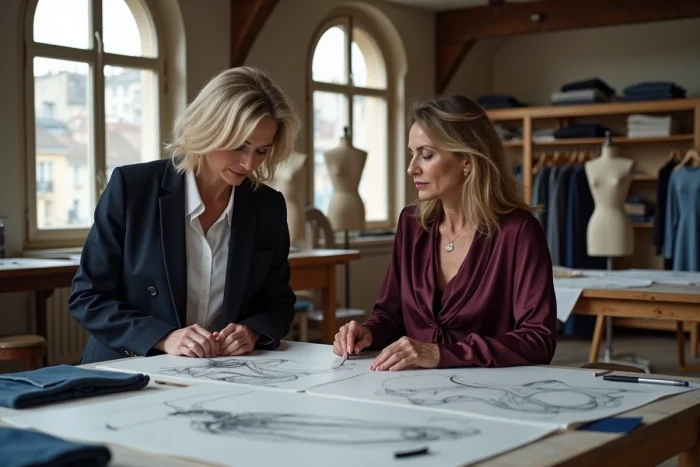
The Parisian creative scene is renewing itself through its margins, not through its institutions. The young creators who matter today are not seeking to integrate into the official fashion week calendar. Their strategy relies on off-calendar presentations, collaborations with local artisans, and direct distribution.
This model short-circuits the traditional chain of couture house, showroom, buyer, department store. The creator produces in small series, sells through their own channel, and controls their image without intermediaries. The consequence for Parisian style is direct: the pieces circulating on the street no longer resemble what is seen on the runways.
Events like the Paris Fashion Days, recently documented by Le Figaro Madame for the autumn-winter season, illustrate this coexistence between the official calendar and the parallel scene. The ready-to-wear presented during these days adopts rougher, less staged codes, better reflecting the clothing reality of the capital.
Textile Know-How and Parisian Couture
The Festival of Art History now includes fashion in its programming, with a recent edition dedicated to the subject under the title “Fashion.” This intersection of art, history, and clothing reinforces Paris’s position as a city where fashion is both thought and worn.
Parisian sewing workshops, often invisible to the general public, supply both established houses and independent creators. This dual function maintains an unparalleled technical ecosystem, where the same workshop can work on a haute couture dress in the morning and on a streetwear capsule in the afternoon.
- Embroiderers and pleaters located in the northern districts of Paris work for several houses simultaneously, promoting an informal circulation of know-how
- Short training courses in modeling and pattern-making are multiplying, attracting profiles transitioning from other sectors who bring external skills to the industry
- Clothing rental and shared wardrobes are gaining ground as an alternative to purchasing, with platforms specifically for Paris
The Parisian style as it is being constructed today is no longer a matter of silhouettes dictated by a few houses. It is an assembly of precise chromatic choices, more selective purchasing circuits, and a fashion culture that relies as much on museums as on workshops. The creators who will mark the upcoming seasons are likely those already working in these interstices, far from the spotlight of fashion week.