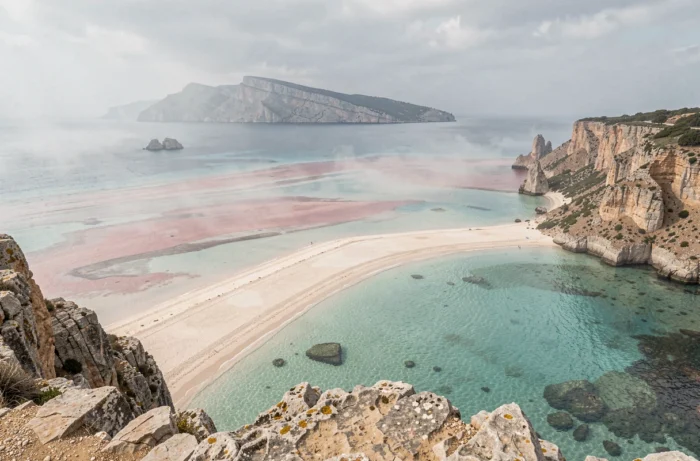
Balos Beach, located in the far northwest of Crete, attracts considerable crowds each year with its turquoise waters and shallow lagoon. But beyond the postcard image, this stretch of Cretan coastline carries stories much older than tourism. Between Venetian fortifications, Barbary pirates, and enduring legends, Balos encapsulates several centuries of Mediterranean history within a few hundred meters of sand.
Gramvoussa and Balos: A Fortress Tied to the Pirates of Crete
Have you ever noticed, upon arriving by boat, that massive silhouette dominating the islet of Gramvoussa right across from the lagoon? It’s not just a backdrop. The fortress crowning the island was built by the Venetians to lock down maritime access to the Gulf of Kissamos.
After the fall of Crete under Ottoman rule, Gramvoussa became a stronghold for Cretan resistance fighters. Lacking resources, they turned to piracy to survive. Merchant ships sailing along the island’s northwest coast became regular targets.
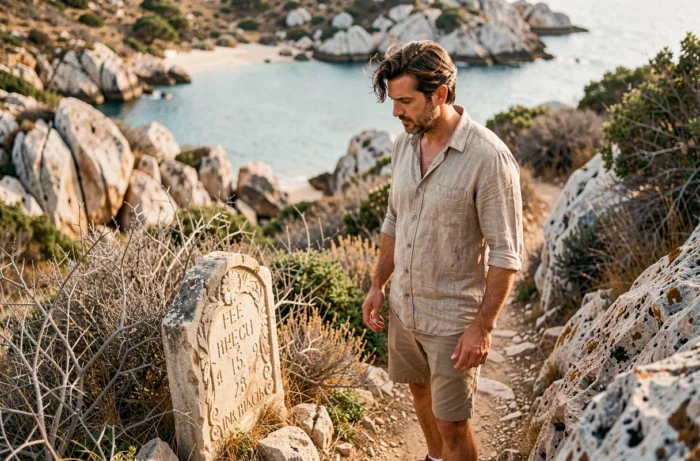
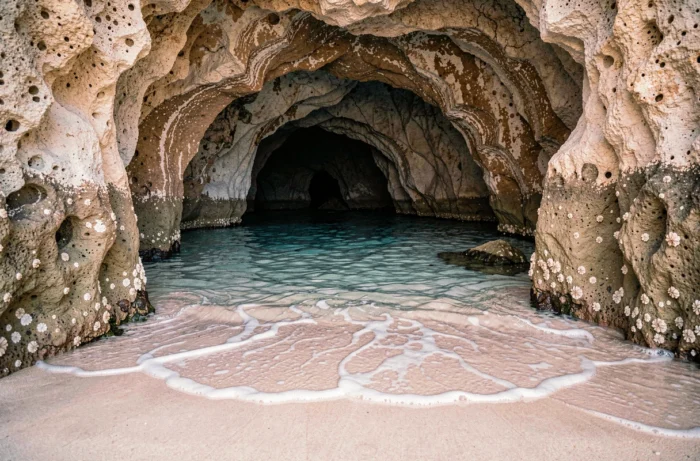
This period has left a lasting mark on the local imagination. The inhabitants of the Kissamos region still tell tales of pirate treasures lying somewhere between the rocks of Gramvoussa and the caves accessible from Balos. No archaeological discovery has confirmed this, but the story persists. Exploring the mysteries of Balos Beach, one quickly realizes that the boundary between documented history and oral legend remains porous in this part of Crete.
Legends of the Balos Lagoon: Pink Sand and Sacred Waters
The sand at Balos has a pinkish hue in some places. The scientific explanation is known: crushed shell fragments mix with the white sand, giving it this unusual color. The local version is more poetic.
According to Cretan tradition, the pink color of the sand comes from the blood shed during ancient battles. The fights between pirates, Venetians, and Ottomans are said to have stained the shore. This legend is found on other Mediterranean beaches with similar sand, but it takes on a particular intensity here due to the proximity of the Gramvoussa fortress.
The lagoon itself fuels other tales. Its shallow depth, its almost unreal blue waters, and its geographical isolation have long led local fishermen to believe that the place was protected by a natural force. Some viewed it as a sacred place, forbidden to night fishing.
Tigani Peninsula and the Shape of a Feline Paw
The peninsula that closes the lagoon is called Tigani, which means “frying pan” in Greek. Viewed from above, its shape also evokes, according to some, a giant feline paw resting on the sea. This silhouette has inspired stories where a mythological creature guarded the entrance to the lagoon.
These legends are not found in any official guide. They circulate orally among the families of Kaliviani and Kissamos, passed down through generations of fishermen and shepherds who frequented the area long before the arrival of the first tourists.
Ecological Capacity of Balos: When the Myth of Paradise Collides with Reality
The fascination with Balos has a concrete downside. Visitor numbers regularly exceed the estimated ecological capacity of the site. Experts cited in September 2026 estimate this sustainable capacity at around 2,230 to 2,330 visitors per day, while peak season numbers far exceed this threshold.
Why does this detail matter in an article about legends? Because tourist pressure directly threatens what makes Balos unique. The shallow lagoon, the pink sand, the rock formations: everything that fuels local stories relies on a fragile ecosystem.
- Maritime access has been more regulated since 2024: boats can no longer anchor too close to the beach, and a floating platform has been installed to secure passenger disembarkation.
- The municipality of Kissamos is studying a reservation system with three-hour time slots, with a maximum of 1,200 people per slot and mandatory rotation between groups.
- The reduction of beach facilities (sunbeds, umbrellas) is part of measures aimed at limiting the artificialization of the site.
This reservation system, planned for the 2027 season, has not yet been definitively adopted. But it marks a turning point: Balos is transitioning from a legendary place accessible to all to a site whose preservation requires active management.
Minoan Civilization and Cretan Heritage Around Balos
Western Crete, where Balos is located, remains less known than the Heraklion region and the Palace of Knossos for its archaeological heritage. The Minoan history of this area is, however, well documented.
The Minoan civilization occupied the entire island for several centuries. While the major palace centers are concentrated in central and eastern Crete, the northwest coast served as a maritime passage point. Minoan ships sailed past Gramvoussa to reach the Peloponnese or the Cyclades.
This crossroads function explains why so many stories have crystallized around Balos. A transit point is also a place where stories accumulate, distort, and are transmitted. Legends of buried treasures, naval battles, and sea creatures find their origin in this strategic geographical position, at the crossroads of Eastern Mediterranean trade routes.
A Stay in Crete Beyond the Beach
Balos cannot be understood in isolation. A trip to this part of the island benefits from including the old town of Chania, the Samaria Gorge, or the ruins of Rethymnon. Each of these sites carries its own stories, and it is their accumulation that gives western Crete its narrative density.
The legends of Balos are not isolated curiosities. They are part of a broader tapestry of Cretan stories where resistance, piracy, the sacred, and geology intertwine. The pink lagoon, the crumbling fortress, the paw-shaped peninsula: each element of the landscape carries a layer of meaning that a simple vacation photograph cannot capture.